
GM OAMI Workforce Impact: How Supplier Roles Are Evolving With Automation
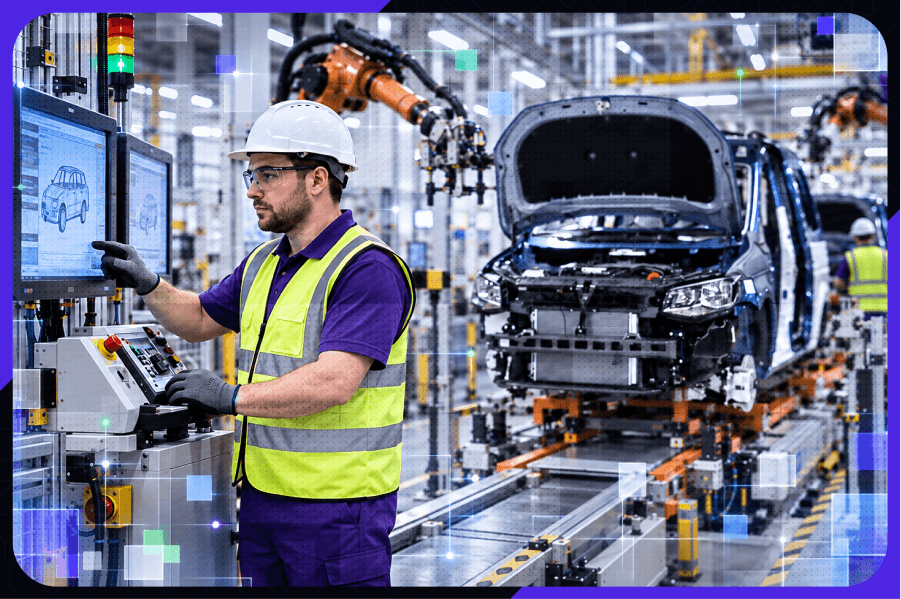
What happens to the workforce when manufacturing becomes more automated? For suppliers preparing for GM’s Overall Automation Maturity Index (OAMI), that question is becoming increasingly important.
OAMI evaluates automation maturity across GM’s supplier network. While greater automation can reduce the amount of manual work required for certain manufacturing processes, OAMI goes beyond the number of robots or automated cells on a factory floor. It considers the broader connected foundation required to support more efficient, responsive, and adaptive manufacturing.
That distinction matters when you're thinking about the GM OAMI workforce impact. Automation maturity isn't simply about adding more robots. It can change what people do, what information they need, and how they respond when something goes wrong.
For suppliers, that means workforce planning needs to evolve alongside automation. As repetitive processes become more automated, operators, technicians, supervisors, maintenance teams, and quality teams increasingly need real-time visibility into production conditions to monitor performance, manage exceptions, troubleshoot issues, and make faster decisions.
How Automation Maturity Is Reshaping Manufacturing Work
The easiest way to understand the workforce impact of OAMI is to look at how a typical manufacturing task evolves as automation matures.
In a less connected manufacturing environment, employees may spend significant time on repetitive production steps, manually entering information, reconciling data across systems, monitoring individual machines, or reacting to problems after production has already been interrupted.
As automation matures, more routine processes can be automated or coordinated digitally. That doesn't automatically mean the person performing the task disappears. It can mean the task changes.
The employee's role doesn’t necessarily disappear. Instead, responsibility can move toward monitoring automated processes, responding to exceptions, diagnosing problems, maintaining equipment, managing quality issues, and making decisions based on real-time production conditions.
For example, an operator may no longer need to manually record production counts if equipment automatically sends that information to the manufacturing system. Instead, that operator may spend more time understanding why production is falling behind target, responding to an equipment alert, identifying a quality issue, or resolving a material constraint.
This shift from routine execution to oversight and exception management is one of the most important workforce changes associated with increasing automation.
This is an important distinction when evaluating the workforce impact of OAMI. Automation maturity measures how effectively manufacturing processes operate as a connected system, not simply how many people have been removed from a process.
The Impact of GM OAMI on Supplier Workforces
GM OAMI doesn’t include a publicly stated requirement for suppliers to eliminate a specific number of jobs or reduce headcount by a particular percentage.
However, greater automation can affect labor requirements.
If a manufacturer automates repetitive assembly, inspection, material movement, data collection, machine tending, or other manual processes, fewer labor hours may be required to perform those particular tasks. The workforce impact will depend on the supplier, manufacturing process, production volumes, existing level of automation, and how the organization chooses to redesign work.
That's why questions about “GM automation job cuts suppliers” need some context. OAMI can influence how suppliers approach labor and manufacturing operations, but it shouldn’t be interpreted as a mandate to replace workers with robots.
That is different from saying that OAMI itself is a job-cutting program.
GM describes OAMI as a supplier automation initiative aimed at improving productivity, safety, quality, and competitiveness. Its broader goal is to encourage manufacturing operations that are more automated, connected, scalable, and responsive to changing production requirements.
For suppliers, the more useful question is which work should be automated, which still requires people, and how those roles need to evolve as automation becomes more capable.
What Automation Maturity Means for Manufacturing Jobs
So, does automation maturity mean replacing workers? Not necessarily.
Automation maturity means reducing unnecessary manual intervention and creating a manufacturing environment in which equipment, systems, data, and people operate together more effectively.
A plant can invest heavily in robots and still have relatively disconnected operations.
For example, an automated cell may produce parts with little human involvement while employees continue to manually transfer production information into the ERP, reconcile quality records in spreadsheets, investigate downtime without real-time context, or move information between systems that can’t communicate with one another.
The plant has automation, but the people supporting that automation are still doing a lot of manual work.
That is automation, but it is not necessarily connected automation.
More mature manufacturing environments reduce both physical manual work and manual information handoffs. Machines communicate with systems. Production data is contextualized. Workflows respond to events. Employees receive the information they need when operating conditions change.
This is where integrated automation and connected data become important. The goal is to create manufacturing operations in which equipment, software, data, and employees can work together without unnecessary gaps.
The Evolving Role of Operators, Technicians, and Supervisors
As manufacturing becomes more automated, many roles move from routine execution toward supervision and exception management.
An operator responsible for one manual production station may increasingly oversee several connected machines or automated processes. Instead of performing the same physical task repeatedly, the operator needs to understand whether those processes are running correctly and what action to take when something falls outside normal conditions.
That can require a different skill set, but it also gives employees a more active role in managing production performance.
Similar changes can occur across manufacturing teams.
Production supervisors need visibility into equipment, work orders, output, downtime, labor, and material conditions so they can respond quickly when production begins to move off plan.
Maintenance teams need access to equipment conditions, maintenance history, downtime events, and production context to identify problems and prioritize work.
Quality teams need production and traceability data linked to specific parts, machines, work orders, and operating conditions to investigate issues more efficiently.
Operators need clear alerts, workflows, and production context so they know when automated processes require intervention.
As automation takes on more routine work, these information needs become more important, not less.
Why Real-Time Data Matters More as Automation Increases
Real-time data becomes more important as automation matures because employees spend less time directly performing routine processes and more time monitoring whether those processes are running correctly.
Think about the difference between knowing that a machine stopped and knowing why it stopped.
An automated machine can tell a manufacturer that something happened, and connected manufacturing systems provide the context needed to understand what that event means.
For example, an equipment alert becomes substantially more useful when the employee responding to it can also see:
What product is being produced
Which work order is running
Whether the output is currently on schedule
What materials are available
Whether there are active quality concerns
When the machine was last serviced
What happened immediately before the condition changed
Without that context, employees may still have to piece together what happened manually. With it, they can move more quickly from identifying a problem to deciding what to do about it.
This is particularly important as suppliers work toward more connected operations and smart factories. The more processes are automated, the less practical it becomes to rely on people to manually collect and connect the information those processes generate.
How Suppliers Can Prepare Their Workforce for Greater Automation
Suppliers preparing for OAMI should consider workforce readiness alongside investments in equipment and technology.
The workforce conversation should start before new automation is deployed, not after.
Identify Manual Work and Manual Data Handoffs
Look beyond physical production tasks.
Map where employees manually enter data, transfer information between systems, reconcile spreadsheets, create paper records, or notify other teams when operating conditions change.
Removing these information bottlenecks can be just as important to automation maturity as automating a physical process.
This can also reveal opportunities to improve the employee experience of automation. If an operator spends part of every shift moving information between systems, eliminating that work can free them to focus on production, quality, and problem-solving.
Connect Existing Manufacturing Equipment
Improving automation maturity doesn’t always require replacing existing equipment.
Many manufacturers already have PLCs, robots, sensors, automated cells, ERP systems, and other technologies that can generate valuable operational data. Connecting those systems can create greater visibility and coordination without requiring a full rip-and-replace project.
For suppliers with existing automation investments, this can be an important part of building automation maturity without starting over.
Define How Employees Handle Exceptions
Automation works best when normal operating conditions are predictable.
Manufacturers also need a clear process for what happens when those conditions change.
Determine who receives an alert, what information they need, what action they can take, and when the issue should be escalated.
This is where employees become exception managers rather than simply process operators. The technology handles predictable conditions, while people step in when judgment, troubleshooting, or decision-making is needed.
Give Operators Real-Time Production Context
Employees supervising automated processes need more than isolated machine data.
Connecting equipment information with work orders, quality, materials, maintenance, inventory, and production targets helps employees understand what is happening across the operation and respond faster.
The objective is to give the person closest to the process enough context to make a good decision without first having to search across multiple systems.
Standardize Before Scaling
As automation initiatives expand across production lines and facilities, suppliers need a consistent way to connect equipment, structure data, and manage workflows.
Standardization makes it easier to reproduce successful automation initiatives across multiple plants and provides leadership with a more consistent view of automation maturity across the organization.
It also gives suppliers a stronger foundation for continuous improvement. Once data and workflows are connected consistently, teams can identify what is working, find gaps, and apply successful approaches across the broader supply base.
How Fuuz Supports a More Automation-Ready Workforce
As suppliers prepare for OAMI, they need to consider how automation will affect the people managing production. A connected operational foundation gives employees the data, visibility, and workflows they need to work effectively alongside increasingly automated processes.
Fuuz helps manufacturers build the connected foundation required to support greater automation maturity without forcing a complete technology overhaul.
The Fuuz industrial operations platform connects machines, PLCs, robots, AMRs, enterprise systems, and production data into a shared operational environment. Manufacturers can connect existing equipment and systems while improving visibility across manufacturing, warehousing, quality, maintenance, and other operational processes.
Fuuz helps manufacturers strengthen automation readiness in three key ways:
Connect Existing Equipment and Systems
Fuuz provides native connectivity across plant-floor and enterprise technologies, helping manufacturers bring operational data together without adding unnecessary middleware or replacing systems that already work.
Suppliers can therefore build on the equipment and systems they already have while creating the connected infrastructure needed to support more integrated automation.
Contextualize Production Data
Through a Unified Namespace, production signals can be organized into a structured operational model that connects machine conditions with the production context employees need to understand them.
Instead of giving employees another stream of machine data to monitor, Fuuz helps put that data into the context of the manufacturing operation.
Orchestrate Real-Time Workflows
MES, WMS, quality, maintenance, and other operational applications can work from the same connected data foundation. Events on the plant floor can trigger alerts, workflows, and actions based on current operating conditions.
This helps reduce the manual coordination that can slow down automated operations and gives employees a clearer path from an event to the appropriate response.
For automotive manufacturers, this creates an environment in which greater automation doesn’t leave employees disconnected from the processes they manage.
Instead, operators, supervisors, technicians, and other manufacturing teams gain the visibility and operational context required to work effectively alongside increasingly automated processes.
Build the Connected Foundation for Automation Maturity
The GM OAMI workforce impact is more complicated than a simple workers-versus-robots question.
Greater automation can change labor requirements and reduce the need for repetitive manual work. At the same time, connected and adaptive manufacturing places greater importance on the employees responsible for monitoring production, managing exceptions, maintaining equipment, protecting quality, and keeping automated processes running effectively.
For GM suppliers, preparing for OAMI means considering both sides of the equation. Where can automation remove repetitive work? And where do employees need better data, better workflows, and better tools to manage the automated processes taking their place?
Fuuz helps manufacturers build that foundation by connecting existing technologies, standardizing operational data, improving real-time visibility, and enabling more responsive workflows across the plant.
This creates a manufacturing environment where automation can continue to scale while employees have the information and operational context they need to keep production running.
Contact Fuuz to learn how a unified industrial operations platform can support your automation maturity journey.